By Mark Alan Smith, Carroll County Historian and Genealogist
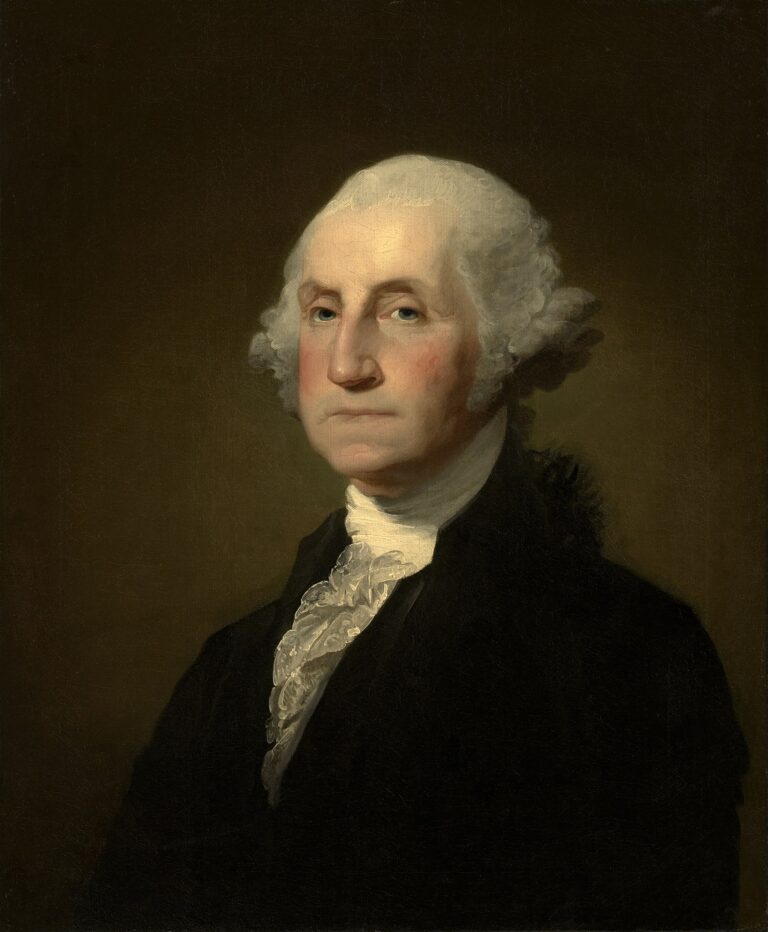
Who would have thought that the person who endured the pathos of Valley Forge, the pain of Brandywine, and the passion of freedom would also be an advocate of canals?
George Washington possessed a vision of transportation to expand the new nation of which he was the midwife, birthing a new entity on the world scene.
Visionary American leaders including George Washington and James Madison played pivotal roles in both the Patowmack Canal Company and the formation of the nation. Meetings initiated as part of the formation of the Patowmack Canal Company reinforced the need to clarify and strengthen the role of the central government in trade and commerce. Trade conferences that took place at the beginning of the Patowmack Canal venture directly influenced James Madison and others to create the 1787 Constitutional Convention.
Prior to the American Revolution, George Washington wished to develop transportation routes from the eastern seaboard to the vast western territories. After years of petitioning, his dreams were finally realized in the 1780’s. Along with James Madison, Washington proposed a canal as one element of an overall strategy to unite the new country. By January 1785, both Maryland and Virginia had passed the legislation needed to build a canal.
In 1785 Washington chartered the Patowmack Canal Company with the purpose of clearing a river channel and building skirting canals around the river’s most turbulent section. But the country had other plans for Washington. After chairing the Constitutional Convention, Washington was selected as the first president of the United States in 1789. He appointed his friend Thomas Johnson to fill his post as president of the Patowmack Company, but kept an eye on the difficult work being done there.
Near the canal construction, Revolutionary War hero “Light Horse” Harry Lee, the father of Robert E. Lee, founded Matildaville, (named after his wife). Here the Patowmack Company stationed its headquarters and created housing for workers. In the little town, one could find a market, gristmill, sawmill, foundry, inn and ice house. Boardinghouses and other small homes also emerged to meet the increasing demands of canal patrons.
Thousands of boats headed to Georgetown used the skirting canals to successfully transport goods such as flour, whiskey, tobacco, and iron. Vessels heading upstream, which was much more difficult, brought manufactured goods such as cloth, firearms, and hardware towards Cumberland. The downstream trip took three to five days. The upstream journey, which required laborers to pole against the current, lasted ten to twelve days.
After two terms, President Washington returned to meetings of the Patowmack Company, but lack of funds slowed down progress, especially the difficult channel around Great Falls. In 1799, at about the same time the Maryland legislature purchased additional stock in the company. Washington passed away. Three years later, the locks at Great Falls were opened the Potomac at last became a navigable route.
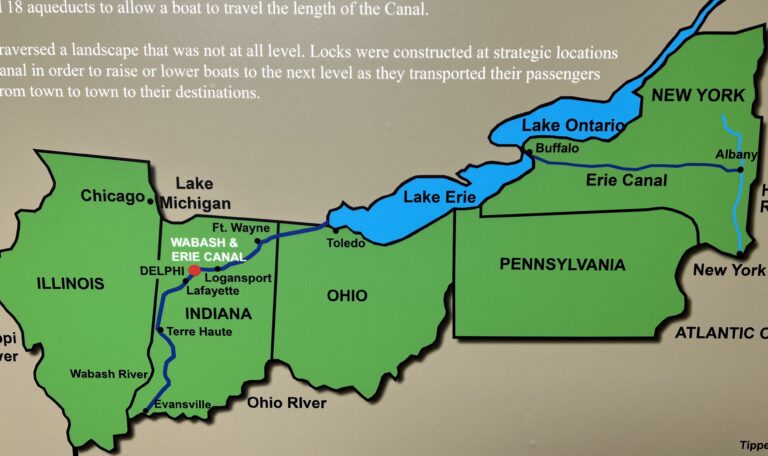
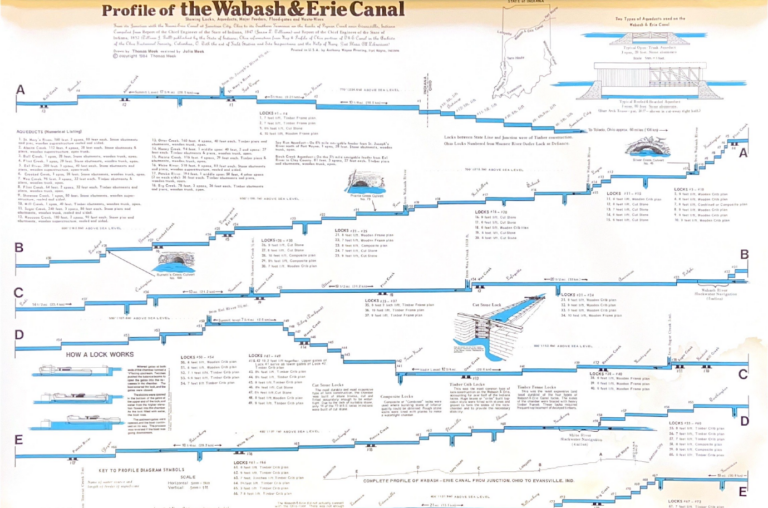
To conclude and to focus on the local scene in Delphi and Carroll County–let us not forget the vision of the canawlers on the State scene which created the means of transportation which brought goods, services, and people to the local scene and which we celebrate here in Delphi and, more specifically, let us not forget the vision of those who created the local attraction. Readers and others are encouraged to visit the Canal Interpretive Center to read the letter written by Washington in one of the exhibits.